
Available 24/7
Divorce Law in Massachusetts
Divorce Law and Legal Process in Massachusetts
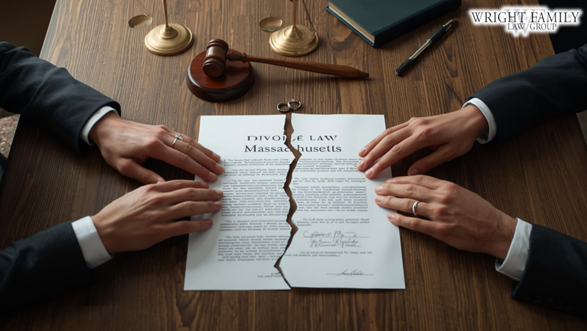
Understanding Divorce, Separation, and the Legal Process
No one plans to become an expert in divorce law. Yet here you are, facing questions about finances, family, and what comes next. Massachusetts divorce law sets the rules, but how they apply depends on your situation and the choices you make.
Wright Family Law Group offers practical guidance and steady support to help you move through the process with confidence.
Grounds for Divorce in Massachusetts
Massachusetts allows both no-fault and fault-based divorces. Most divorces happen when couples feel they cannot fix their problems.
In these cases, neither spouse needs to prove fault, and a divorce can move forward even if only one person wants it.
Some divorces involve issues such as marital misconduct, abandonment, or abuse. These circumstances can affect how a case moves forward, but they do not always control the final result.
Uncontested and Contested Divorce
In Massachusetts, a divorce can be either uncontested or contested, depending on how much the spouses agree.
Uncontested Divorce
An uncontested divorce happens when both spouses agree that their marriage is over and settle all necessary matters. Usually, they file a joint petition and may work out details through negotiation or divorce mediation before filing.
In some cases, couples may also consider divorce conciliation, a structured process that helps parties work toward agreement before moving deeper into litigation.
Even when parties agree, Massachusetts courts require:
- Complete and accurate financial statements
- A written separation agreement
- Properly executed legal documents
Court approval is still required before a divorce becomes final.
Contested Divorce
A contested divorce occurs when spouses cannot agree on one or more issues, or when one spouse does not consent to the divorce. These cases go through a formal court process.
This process can include temporary decisions, sharing information, court hearings, and sometimes a trial.
Contested divorces often involve more work and legal support when couples cannot agree on financial or parenting issues.
Key Issues Addressed in a Divorce Case
Massachusetts courts must resolve several legal issues before a divorce can be finalized. These may include:
Division of Marital Property
Massachusetts law focuses on fairness when dividing marital property, not an automatic fifty-fifty split. Courts take several factors into account, including the length of the marriage and each spouse’s financial contributions.
- Real estate
- Bank accounts and investment accounts
- Retirement accounts and pensions
- Business interests
- Personal property and other financial assets
Support Orders
Divorce proceedings may involve support orders, including:
- Child support
- Spousal support (alimony)
Courts rely on statutory guidelines, income information, and financial statements when determining support.
Child Custody and Parenting Time
Children add an important layer to any divorce case. In Massachusetts, courts decide which parent will make important decisions for the child and how parents will share time with their child. The goal is to make sure the child has a safe and caring home.
Judges may review each parent’s involvement, living arrangements, and ability to meet the child’s needs. Parenting plans help organize these details in advance, setting clear expectations for schedules, decision-making, and communication.
Health Insurance and Benefits
Divorce can change your health insurance and other job-related benefits, especially if you are on your spouse’s plan. Often, coverage does not continue once the divorce is final, so it is important to plan in advance.
In Massachusetts, divorce cases often involve health insurance during and after the process. Spouses might agree on temporary coverage, share costs, or find other insurance options. If needed, the court can also make orders about coverage and related expenses.
The Divorce Process in Massachusetts
While every case is different, most divorce cases follow a general sequence:
- Filing of a complaint or joint petition
- Exchange of financial information and documentation
- Temporary court orders, if needed
- Negotiation, mediation, or settlement efforts
- Court hearings or trial if disputes remain
- Final judgment of divorce
The court relies on accurate information and proper filings at each stage. Incomplete or inaccurate documentation can delay the process or affect outcomes.
Safety and Urgent Concerns
When safety is at stake, Massachusetts courts move swiftly. Judges can quickly issue protective or short-term orders for urgent matters like child visitation, communication, or living arrangements.
While these orders are temporary, they often set the tone for the rest of the case. Addressing safety from the start can bring a sense of stability during the upheaval of divorce.
The Role of a Divorce Attorney
Divorce law involves strict procedural requirements and long-term consequences. An experienced divorce attorney can help you:
- Understand how Massachusetts law applies to your situation
- Prepare and review financial statements and legal documents
- Evaluate options for reaching an agreement
- Advocate for your interests in court when necessary
Legal guidance is particularly important in cases involving significant assets, complex finances, or contested parenting issues.
Post-Divorce Matters and Modifications
After a divorce, life can change in ways you might not expect. Massachusetts law lets you request changes to some court orders when your circumstances change. Wright Family Law Group helps clients with post-divorce issues such as:
- Child support modifications
- Alimony modifications
- Child Custody and parenting time changes
- Enforcement of existing court orders
Legal Guidance From Wright Family Law Group
Divorce forces people to make decisions they never expected to face. Questions come up quickly, emotions run high, and the legal process can feel unfamiliar. At Wright Family Law Group, we help clients slow things down, understand what matters most, and make decisions they can stand behind.
Since 2009, our divorce lawyers have worked with individuals and families across Massachusetts at every stage of divorce.
You can take time to understand your options before deciding anything. We offer a free 15-minute discovery call to help you understand your options. Full consultations are also available if you prefer more time. Our Tewksbury office serves clients throughout Middlesex and Essex counties.
Don’t Take it From Us
Hear What Our Clients Say

After my initial consultation with Ellen Wright, I met with David Gavegnano to discuss my case. He was able to answer the questions about my case and help me navigate the situation. Communication with David and the legal support team was prompt...
Sue has been my trusted attorney and advisor for years, and I truly cannot recommend her highly enough. Sue brings a combination of expertise, sound judgment, and unwavering integrity to everything she does. What sets Sue apart is not just her legal...
One of my clients used Wright Family Law Group for their divorce. I was impressed with how they handled it and other family law issues. Great guidance, timely responses and a real understanding of the realities of divorce.
My experience with family Wright Law Group has been excellent. They have been there for me, always answer my questions and respond in timely manner. They have helped me navigate during the most difficult time in my life step by step. Dave...
I am incredibly grateful for the results achieved in my case. Dealing with child custody and a complex divorce is never easy, but this firm made it manageable. They are hands-down the best firm in Massachusetts for anyone needing a dedicated divorce...
My husband and I had a great experience with David Gevegnano and the Wright Family Law Group. Everyone was very professional and willing to help with all of our issues. David handled our case with the utmost care, exceptional professionalism, and prompt...
Ellen and her team are highly responsive, efficient, knowledgeable, and very caring. Ellen’s professionalism and expertise come highly recommended.
I cannot speak highly enough of the exceptional legal team at Wright Family Law Group. They provide professional, transparent, knowledgeable, and highly compassionate support at every step of the way. In sensitive matters like divorce, child custody, and child support, it very...
Wright Family Law Group is an excellent option for anyone who needs a skilled team of lawyers and paraprofessionals to handle their divorce, child custody dispute, and child support. They really care about achieving the best outcome for their clients and their...
Attorney Ellen Wright and her team helped me through a very difficult legal process. They were there for me for the whole process. Highly recommend!

BEGIN YOUR JOURNEY TO RESOLUTION
Schedule Your Expert
Consultation Now

Attorney Advertising. This information is designed for general information only. The information presented should not be construed to be formal legal advice nor the formation of a lawyer/client relationship. Past results and testimonials are not a guarantee, warranty, or prediction of the outcome of your case, and should not be construed as such. Past results cannot guarantee future performance. Any result in a single case is not meant to create an expectation of similar results in future matters because each case involves many different factors, therefore, results will differ on a case-by-case basis. By providing contact information, users acknowledge and give explicit consent to be contacted via the methods of communication provided, including SMS. Message and data rates may apply. Message frequency may vary. Reply STOP to opt out.
Copyright 2026 All Rights Reserved | Accessibility Notice | Privacy Policy